Many users tell me:
“Your calculations are different from what my family astrologer gave.”
This is a fair question—and an important one.
The short answer is: the difference is real, expected, and astronomical, not an error.
To understand why, we need to talk about Earth’s tilt, precession, and how modern software calculates time and planetary positions compared to traditional manual methods.
Earth Is Not Upright — And That Changes Everything
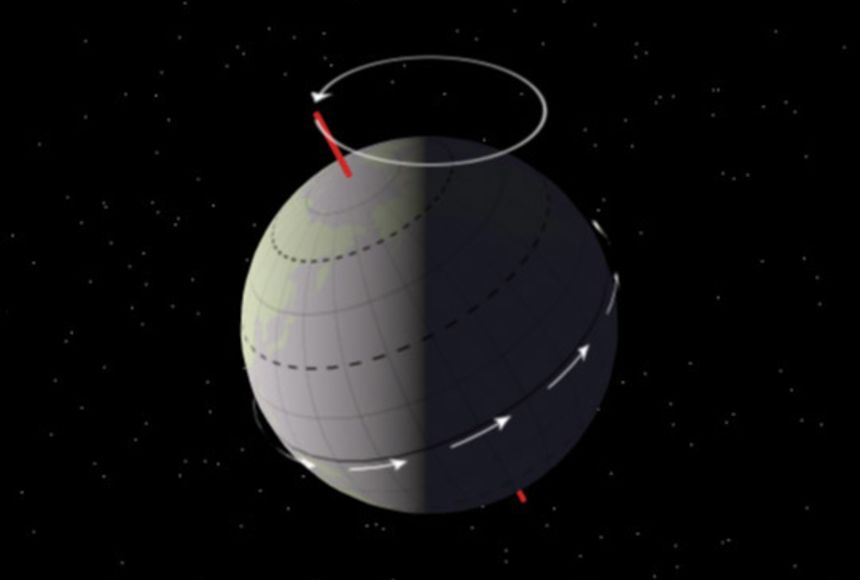
Earth is tilted by about 23.44 degrees on its axis.
Because of this tilt:
Seasons exist
The Sun’s apparent path changes through the year
Equinoxes and solstices occur
The celestial reference frame slowly shifts over time
Astrology is calculated from Earth, not from an abstract space.
So Earth’s tilt directly affects where and when planets appear.
Two Systems, Two Reference Frames
1. Traditional Panchang / Manual Astrology
Most traditional astrologers rely on:
Printed Panchangs
Rule-based approximations
Sunrise-based boundaries
Fixed sign assumptions
Inherited ayanāṁśa values
These systems were accurate for their time, but they assume:
A relatively fixed sky
Minimal long-term drift
Local tradition over astronomical precision
2. Modern Astronomical Ephemeris (What My Software Uses)
My system calculates:
Exact planetary positions (longitude, latitude, declination)
Earth’s axial tilt
Precession of the equinoxes
True sidereal zodiac (with ayanāṁśa)
Location-specific sunrise/sunset
Time-zone and leap corrections
This is the same class of data used by space agencies, adapted for astrology.
Example 1: Makar Sankranti — The Best Proof
Many people believe:
“Makar Sankranti is on 14th January because tradition says so.”
But historically, this was not always true.
What Makar Sankranti Really Means
Makar Sankranti marks the moment when:
The Sun enters Capricorn (Makara) in the sidereal zodiac
It is an astronomical event, not a fixed calendar date.
Then Why Did It Shift?
Due to Earth’s axial tilt and precession:
The Sun’s entry point into Makara slowly shifts every year
About 1 day every 72 years
Over centuries, this drift accumulates
Historical reality:
Around 0 CE: Makar Sankranti occurred in late December
Medieval period: early January
Today: 13–15 January
In the future: it will shift even further
So if a system still assumes “Makara begins on a fixed date,”
that system is outdated, not the sky.
Example 2: Planetary Degrees and Nakshatra Differences
A common complaint:
“My Moon Nakshatra is different here.”
Why this happens:
Moon moves ~13° per day
Nakshatra boundaries are exact (13°20′)
A difference of minutes can change the Nakshatra
Traditional charts often:
Round birth times
Ignore seconds
Use average Moon motion
Ignore declination and tilt corrections
Modern ephemeris:
Uses exact timestamps
Computes real Moon position
Applies true ayanāṁśa
Calculates locally
Result: different but more precise output
This Is Not Disrespect to Tradition
Traditional astrology is culturally rich and spiritually valid.
But:
Panchangs were created when computation tools were limited
Rules simplified calculations for practical use
Drift was acknowledged but not always corrected
Modern software does not replace tradition—it updates it with astronomy.
Just like calendars were corrected from Julian to Gregorian.
Why I Trust My Calculations
My system:
Uses astronomical ephemeris as the base
Applies sidereal correction correctly
Considers Earth’s tilt and precession
Uses location-specific sunrise and time
Does not hard-code dates or signs
Matches real celestial motion, not assumptions
Differences do not mean error.
They mean precision.
A Simple Way to Think About It
If two clocks show different times:
One adjusted for daylight saving
One not adjusted
Which one is “wrong”?
The sky has also changed.
Astrology must acknowledge that change.
Final Thought
When your Kundli differs from an older chart, it does not mean:
Your destiny changed
Astrology is wrong
Someone made a mistake
It means:
The calculations were done using different models of the sky.
Mine follows the sky as it actually is today.
Quick Navigation
Post Information
Published:
January 1, 1970 at 12:00 AM
January 1, 1970 at 12:00 AM
Author:
Administrator
Administrator
Views:
0 times
0 times
Reading Time:
4 minutes
4 minutes
Tags:
kundli different
kundli different